


Oleksandr was born in Kurylivka, a small village nestled south-east of Kupiansk in eastern Ukraine. He spent his entire life in Kurylivka, over 60 years, raising a family and working as a builder. His face, a patchwork of wrinkles and wear, and hands, leathered and strong, spoke to long years of labor.
On the morning of December 23rd, Oleksandr packed his life belongings - two duffel bags, a backpack, and a small flat-screen TV - and waited. He had decided to leave the city.
Kurylivka is only kilometers from the zero-line. One of the first cities to be captured by the Russians in the spring of 2022, it was retaken by Ukraine in their lightning blitz east in early September. Now it is again under the Russian crosshairs, a key target for Russian strategists who aim to seize Kupiansk’s rail junction, with lines connecting Russia to the occupied Donbas.


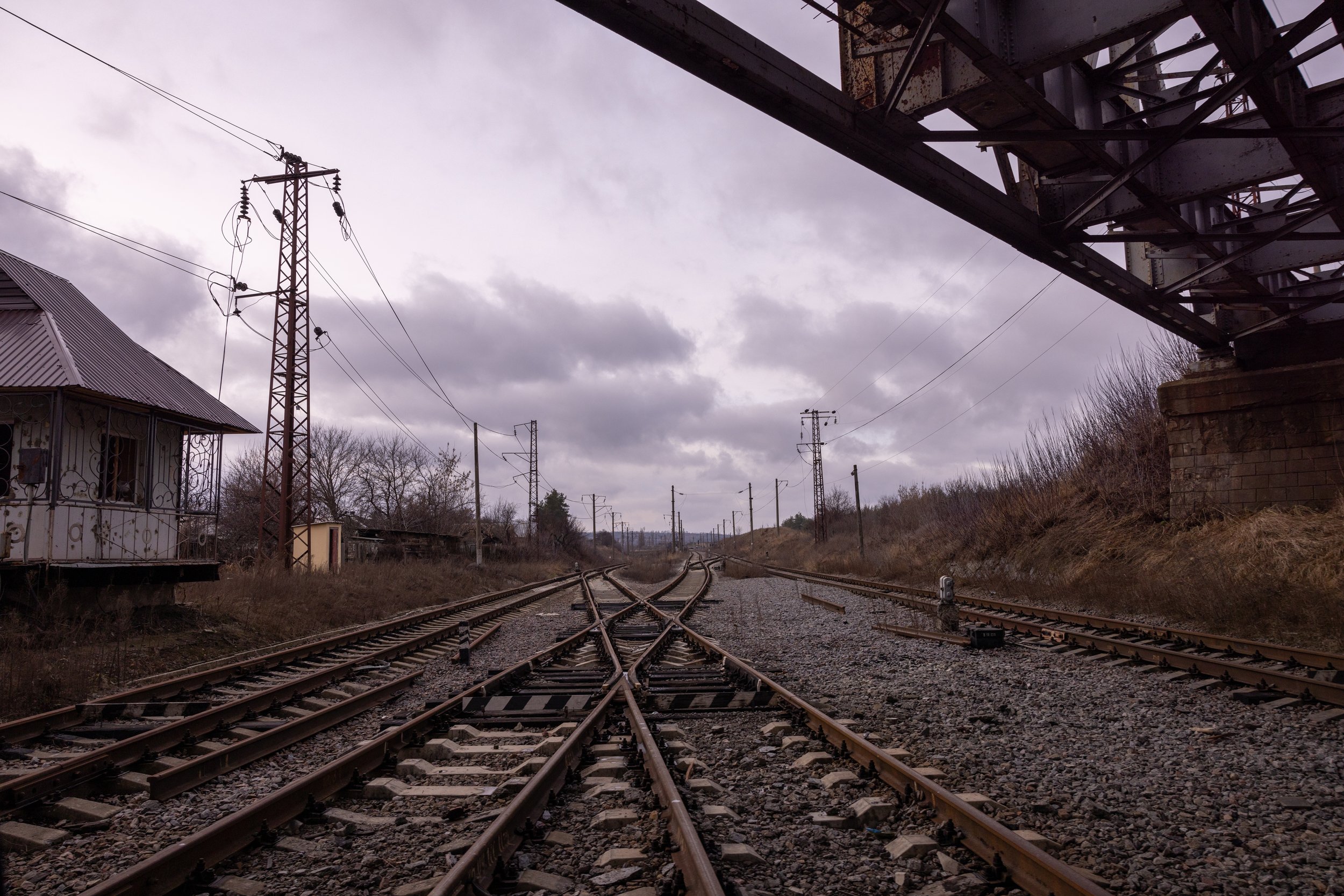


In autumn, Russia had amassed nearly a hundred thousand troops in a bid to retake the city. Their progress has been slow, but relentless.
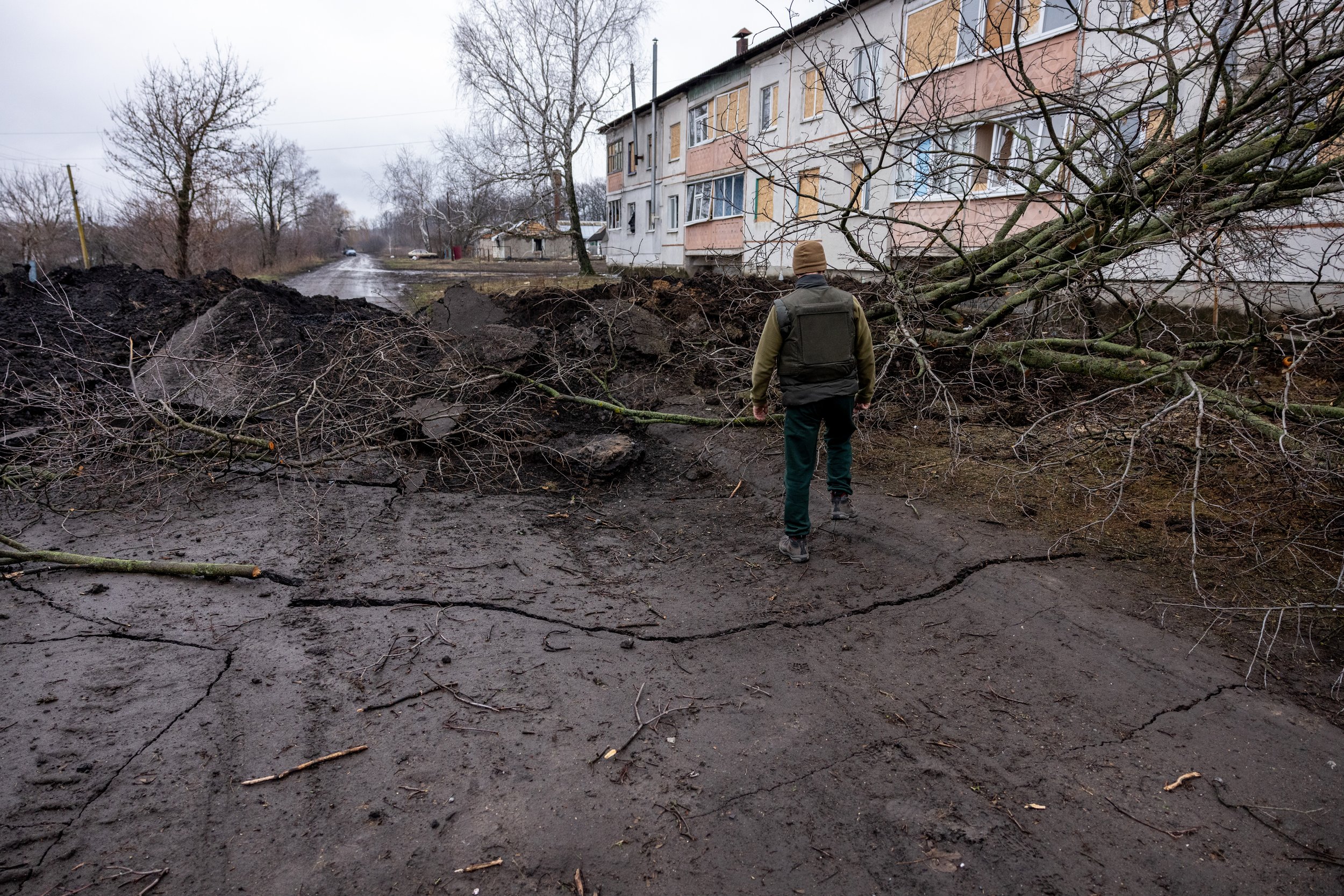
Fighting was bogged down in trenches and unremitting artillery barrages. Kupiansk and Kurylivka were not spared the ferocity of modern warfare. Entire blocks were razed, burned out shells of homes and markets, ash and dirt mixing in the winter rain.
Like many frontline Ukrainian cities, civilian life lingered on. A few buses ran, elderly women with their push carts and impossibly overladen bags walked down the sidewalks, men on bicycles maneuvered the impact craters and military vehicles on the streets.
For those civilians who remained in the region, death from the air was an omnipresent threat.
The night before Oleksandr was due to be evacuated, a shell impacted no more than ten meters from his property. He had already made the plans to leave, this was a last-minute reminder of what remaining could mean.
Oleksandr’s home itself was difficult to find. There were no street signs in Kurylivka, no addresses on a google map, even the locals had issues when asked for directions.
It had been a problem for Oleksandr in receiving humanitarian aid deliveries. It was a problem for Volodymyr, the evacuation lead, as well. Volodymyr was a member of a band of volunteers operating out of Kharkiv. The request for evacuation had been filed through the city administration on a request from Oleksandr’s son and sent down to Volodymyr’s group. So it was that Volodymyr would receive instructions on the phone from Oleksandr’s son, operating off landmarks in a warzone. A better half of an hour was spent circling the city, stopping to question locals, amidst a soundscape of percussive artillery.


The team finally arrived at Oleksandr’s home. On a rusted metal gate, “People live here!” was scrawled in white chalk.

Oleksandr and a neighbor met Volodymyr outside. They greeted each other and entered the yard. The departure was quick and unceremonious. They quietly loaded Oleksandr’s possessions into the back of the car.
Oleksandr’s neighbor wasn’t ready to leave yet. Everyone had their own line to be crossed. Volodymyr collected his information anyways, for if or when that time came. Oleksandr’s dog was tied up, an outwardly fierce German Shepherd whose bark masked an undeniably puppy-like nature. He let the dog off the leash. The dog would remain with his neighbor, no room for pets in the flat Oleksandr was heading to in Kharkiv.


Hands were shaken and farewells made.

The aging Toyota four by four ambled through the rutted mud paths of the village. Oleksandr stared out the window. His gaze was vacant, pitched between window scenes of his hometown’s destruction, and a glaze of contemplation. It wasn’t until the car reached the nearby city of Shevchenkove that Oleksandr spoke.
In Shevchenkove Oleksandr met with a regional administrator to register his evacuation. There he went through a series of security questions. It was standard evacuation procedure required by the military administration. Oleksandr exited the administrative building with a white slip of paper, a bureaucratic hall pass allowing his transfer from Shevchenkove to Kharkiv. With his transfer made official to the state, Volodymyr and Oleksandr took a smoke break.


Oleksandr took a drag of his Marlboro red and then turned to Volodymyr. “Thank you” he said in a deep gravelly voice, “thank you.”
Between drags of their cigarettes the two chatted. “I started to smoke when the shelling began to happen every day” Oleksandr said. “I had two heart attacks before the war.”
“And you are smoking, still?” Volodymyr responded.
It was the stress of living in such a situation that caused him to relapse. “During the day it is easier—because you have things to do—to distract you.” He paused, “But during the night what can I do? Especially when there are no lights —just the moon. You are just laying down and staring at the ceiling for hours through all the shelling.”
So it is that the war lays claims to Ukrainian lives, so many affected not only by the physical impact of metal and flesh, of collapsed building or disease – but to the pervasive atmosphere of anxiety that impacts every waking moment of their days.
It is a war statistic not often accurately captured or considered, but with a far-reaching impact on health and mortality.


By the time Oleksandr reached Kharkiv it was well past dark, the outlines of apartment blocks in rising over the crest of the ring road.
Their destination was a complex of soviet-constructed dormitories. Once these dormitories had housed the thousands of students who attended the prestigious universities for which Kharkiv was well known. Now empty, they served as a vital housing means for the thousands of displaced easterners who had fled their villages for the relative safety of Kharkiv. Oleksandr and Volodymyr arrived at a dormitory building serving as a coordination hub for the rehousing and humanitarian administration.
The lights from the dormitory cast a warm glow onto the streets. Inside, framed by tendrils of ribbon lights, Oleksandr began the check-in with the city administration – the final step in officiating his evacuation to Kharkiv. The room was cast in Christmas decorations, it was warm, clean, and quiet. The percussive drumbeat of artillery many miles away.


Oleksandr registered. He had a destination in the city, so would not require housing allotment. He only needed to wait for the humanitarian package set aside for each arrival, boxes of food and hygienic necessities provided by a patchwork of large NGOs.
After the boxes were loaded, he called his relatives, to let them know he was on the way.
Finished, Oleksandr stepped outside for a cigarette, pondering the decorations on the dormitory exterior.
It was nearly Christmas in Kharkiv. The Ukrainian government had changed the dates of the holiday across the country. Formerly the east, predominantly Orthodox, had celebrated from January 6th to 7th. Zelensky’s date change brought the country under a single date, aligning fully with the European holiday calendar. For Oleksandr, this was a new Christmas, a new city, and a new stage of life.
Written and photographed by Zachary Tarrant
